Table of Contents
Introduction
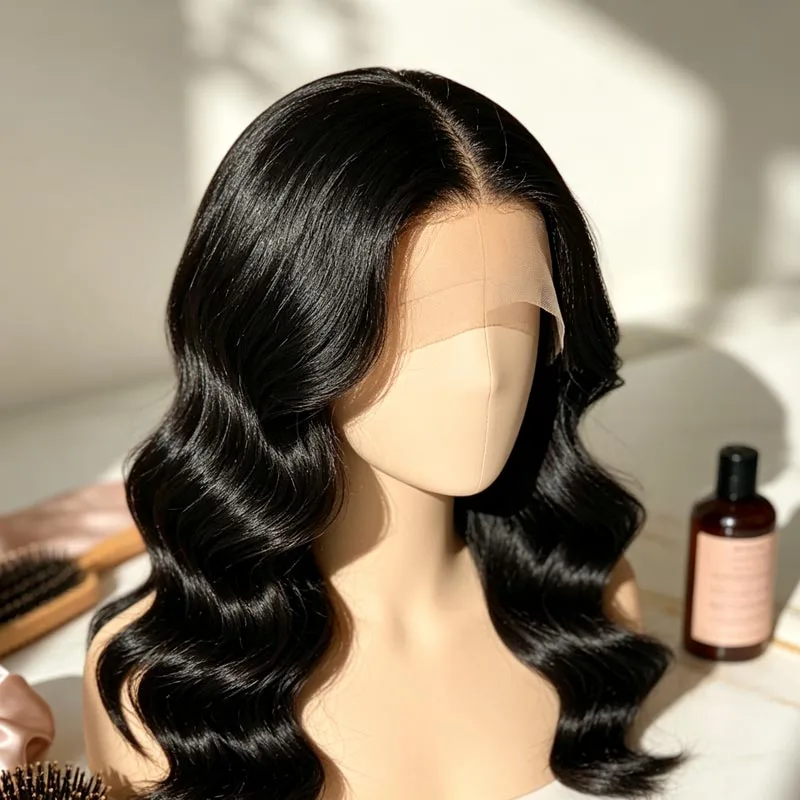
Wig buyers are increasingly looking for products that combine a natural appearance with a simpler wearing process. This has made the wear and go wig an important product concept for beauty retailers, online sellers, distributors, and brands serving customers who do not want a complicated installation routine.
So, what is a wear and go wig?
In commercial wig terminology, a wear and go wig generally refers to a ready-to-wear wig designed to require minimal preparation before use. Many models use a glueless cap structure, pre-adjusted or adjustable features, a prepared hairline, and lace that requires little or no additional cutting. The goal is to allow the wearer to put on, adjust, and style the wig without relying heavily on adhesive, professional installation, or multiple styling steps.
However, “wear and go” is not a single technical construction standard. Different suppliers may use the term for different cap designs, lace areas, hair materials, densities, and finishing methods. For wholesale buyers, understanding these differences is much more important than simply seeing the phrase on a product list.
What Makes a Wig “Wear and Go”?
A true wear-and-go design should reduce the amount of work required between opening the package and achieving a presentable hairstyle.
Depending on the model, this can involve several features working together:
- Glueless or low-maintenance cap construction
- Adjustable straps or elastic bands
- Pre-shaped or pre-plucked hairline
- Pre-cut or minimal-cut lace
- Ready-styled texture
- Defined parting area
- Secure internal combs or other fixing structures
- Cap sizing designed for stable everyday wear
Not every product includes all of these features. Buyers should therefore request exact specifications rather than assuming that every wig carrying a “wear and go” label has the same construction.
The broader concept is related to modern lace wig construction, where hair is attached to a lace base to create a more natural-looking scalp and hairline. Wear-and-go designs focus on simplifying the preparation and installation normally associated with these structures.
Wear and Go Wig vs. Standard Lace Wig
Although both products may use lace, their customer experience can be quite different.
| Feature | Wear and Go Wig | Standard Lace Wig |
|---|---|---|
| Installation | Designed for quick application | May require more preparation |
| Adhesive | Often unnecessary | May be used depending on style |
| Lace preparation | Usually minimized | Lace may need trimming |
| Hairline | Often prepared in advance | May require customization |
| Cap adjustment | Commonly built in | Depends on construction |
| Styling time | Usually shorter | Can require additional styling |
| Target user | Beginners and convenience-focused users | Users comfortable with wig installation |
For retailers, this difference matters because customers are not only purchasing hair. They are also purchasing an installation experience.
A product that looks attractive but requires unexpected preparation can create a mismatch between customer expectations and actual use.
Wear and Go Wig vs. Glueless Wig
The terms “wear and go wig” and “glueless wig” are often used together, but they do not always mean exactly the same thing.
A glueless wig describes how the wig is secured. It is designed to stay in place without relying primarily on glue or adhesive.
Wear and go describes the broader user experience. A wear-and-go product is expected to reduce preparation across several areas, including lace cutting, hairline work, cap adjustment, and styling.
This means many wear-and-go wigs are glueless, but a glueless wig is not automatically ready to wear directly from the package.
For example, a glueless lace wig might still require the customer to trim lace, adjust the hairline, flatten the top, or restyle the texture before wearing it.
For wholesale buyers, these distinctions should be confirmed during sampling.
Why Wear and Go Wigs Are Attractive to Retail Markets
The popularity of convenient wig formats reflects changes in how consumers discover and use beauty products.
Many customers now encounter wigs through short-form videos, livestreams, beauty tutorials, marketplace listings, and social commerce. Products that can be demonstrated quickly are easier for retailers and creators to explain visually.
A wear-and-go wig can also appeal to customers who may not have experience installing lace wigs.
Typical customer groups can include:
- First-time wig users
- Customers who frequently change hairstyles
- Busy consumers looking for faster styling
- Online beauty shoppers
- Customers uncomfortable using adhesives
- Travelers who want convenient hair options
- Retail customers looking for easy daily-wear styles
For wholesalers, the important question is not whether wear-and-go wigs are universally better. It is whether the product matches the expectations of the intended customer group.
7 Specifications Buyers Should Check

Wholesale buyers should evaluate wear-and-go wigs through measurable specifications rather than product names alone.
1. Cap Construction
The internal cap determines how the wig fits and stays in position.
Check whether the design uses:
- Adjustable straps
- Elastic bands
- Internal combs
- Breathable cap sections
- Fixed or removable adjustment components
A product intended for quick installation needs a cap that can remain stable without creating unnecessary pressure.
2. Lace Area
Ask exactly where lace is used.
Depending on the wig, this may include a small front section, lace front, closure area, or another construction.
Larger lace areas can provide greater styling flexibility, while smaller lace sections may simplify preparation.
The correct option depends on the target customer and product positioning.
3. Lace Preparation
One of the most important questions is whether the lace is already cut.
Terms such as “pre-cut lace” should be verified through actual samples because the shape, edge, and remaining lace width can differ between suppliers.
Buyers should inspect whether the lace sits naturally after the wig is adjusted to the head.
4. Hairline Finish
A prepared hairline can make the wig easier for the final customer to use.
Check:
- Hair density near the front
- Hairline shape
- Knot visibility
- Transition between lace and hair
- Symmetry across the front section
An overly dense front can reduce the natural appearance even when the rest of the wig is well constructed.
5. Wig Density
Density affects both appearance and wearing experience.
Higher density does not automatically mean better quality. Different markets may prefer different levels of fullness depending on local styles, climate, age group, and hairstyle.
Retailers should establish a repeatable density specification rather than describing products only as “natural” or “full.”
6. Hair Material
Wear-and-go designs may be produced using human hair, synthetic fibers, or other hair systems.
Human hair generally provides greater flexibility for restyling, while synthetic hair can provide strong shape consistency and ready-defined textures.
Buyers reviewing different wig constructions can compare CHY’s broader wig and beauty product selection when planning product combinations for different retail channels.
The important issue is to match material characteristics with the intended customer expectation.
7. Finished Style
A wear-and-go product depends heavily on how it looks immediately after unpacking.
Samples should therefore be inspected in their normal packaged condition rather than only after professional styling.
Look at:
- Curl or wave definition
- Parting position
- Top shape
- Hair direction
- Frizz level
- Overall symmetry
- Shape recovery after packaging
This gives a more realistic view of what the end customer is likely to receive.
Human Hair or Synthetic Wear and Go Wigs?
Both materials can work in a convenience-focused wig collection, but they serve different requirements.
Human hair wear-and-go wigs can provide a more natural movement and broader restyling possibilities. Buyers should pay attention to hair processing, texture consistency, length, density, and how the hair behaves after washing.
Synthetic wear-and-go wigs can be particularly suitable when a retailer wants consistent preset styles. Because the fiber is manufactured to maintain a particular shape, curls or waves may require less consumer styling.
For a wholesale collection, there is no requirement to choose only one material type.
A retailer may use synthetic styles for fashion-led SKUs while maintaining selected human hair styles for customers seeking different wearing and styling characteristics.
How to Evaluate a Wear and Go Wig Sample
Sample evaluation should reproduce the real customer experience as closely as possible.
Instead of immediately sending the wig to a professional stylist, buyers should first inspect it directly from the package.
A useful evaluation sequence includes:
- Check the package and SKU information.
- Remove the wig without restyling it.
- Inspect the hairline and lace edge.
- Check the cap stitching and internal construction.
- Test the adjustment system.
- Place the wig on a mannequin head or suitable model.
- Observe whether additional cutting is required.
- Check the parting and hair direction.
- Brush or comb the hair according to its texture.
- Compare the finished result with the approved reference sample.
If the product is intended to be marketed as ready to wear, excessive preparation during sample testing should be treated as an important product-development issue.
Consistency Matters More Than a Perfect First Sample
One strong sample is not enough for a wholesale program.
Retailers and distributors need products that remain reasonably consistent across repeated production.
Important repeat-order checks include:
| Inspection Point | What to Compare |
|---|---|
| Hair color | Approved color reference |
| Texture | Curl or wave pattern |
| Length | Confirmed specification |
| Density | Agreed fullness |
| Cap size | Approved measurements |
| Lace | Type, area, color, and trimming |
| Hairline | Density and shape |
| Packaging | SKU and label information |
The purpose of this process is to turn subjective descriptions such as “natural” or “easy to wear” into specifications that suppliers and buyers can reproduce.
Packaging Also Affects the Wear-and-Go Experience
Packaging is often treated as a branding issue, but for ready-styled wigs it can also affect product presentation.
If the wig is compressed too tightly, the hair shape may be distorted. If internal protection is insufficient, the top, bangs, curls, or parting may move during transportation.
Buyers should therefore test the complete product together with its planned packaging.
For private-label or mixed-SKU programs, CHY’s wholesale hair and eyelash services include product specification confirmation, mixed SKU coordination, custom packaging, sample confirmation, and pre-shipment quality checks.
Packaging development should consider both visual branding and how the product arrives in the customer’s hands.
Selecting Styles for a Wholesale Wear and Go Collection
A common mistake is building a collection with too many similar styles.
Instead, buyers can create a clearer product range by varying a few meaningful attributes.
For example:
| Collection Role | Possible Specification |
|---|---|
| Everyday style | Straight or body wave |
| Fashion style | Defined curls or trend color |
| Beginner style | Simple glueless construction |
| Short style | Bob or shoulder-length option |
| Long style | Longer straight or wave texture |
| Statement style | Higher-volume curl pattern |
This approach can make assortment planning easier because each SKU has a clear reason to exist.
Retailers should also compare how styles perform in their own market rather than assuming that the same lengths, textures, and densities will work everywhere.
Common Buying Mistakes
One common mistake is selecting products entirely from photographs.
Images can communicate hairstyle and color, but they cannot fully demonstrate cap comfort, lace flexibility, internal construction, adjustment range, or actual preparation time.
Another mistake is focusing only on hair density. A heavier-looking wig may appear attractive in photos but may not match customers seeking lightweight daily wear.
Buyers can also create problems by changing several specifications at the same time between orders. If hair material, cap construction, density, color, and packaging are all changed simultaneously, it becomes difficult to identify which change affected product performance.
A more controlled approach is to establish a reference specification and document approved changes gradually.
What Information Should Buyers Send to a Supplier?
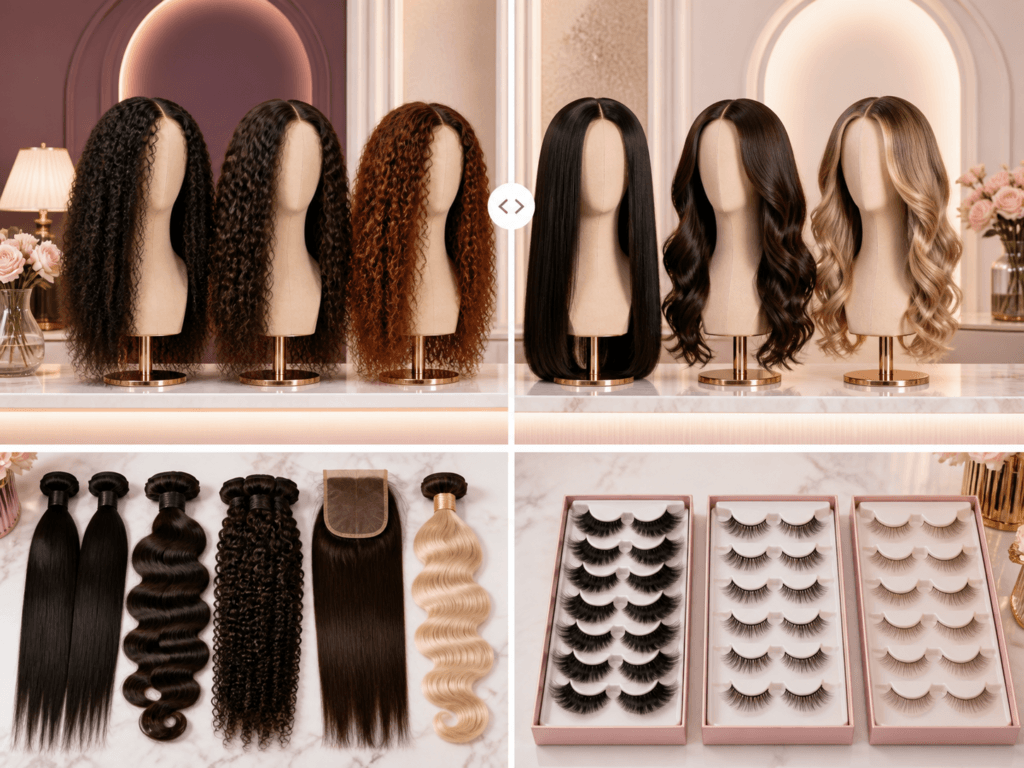
Clear specifications help reduce misunderstandings during sourcing.
A buyer preparing a wear-and-go wig program should ideally provide:
- Hair material
- Hairstyle or texture
- Length
- Color
- Density
- Cap construction
- Cap size
- Lace area
- Lace color
- Pre-cut lace requirement
- Hairline requirement
- Adjustment system
- Packaging format
- Label or private-label requirements
- SKU identification requirements
Reference photos can help communicate visual expectations, but measurable specifications should still be documented separately.
Conclusion
Understanding what is a wear and go wig requires looking beyond the name.
The term generally describes a wig designed to minimize installation and preparation, often through a combination of glueless construction, adjustable cap features, prepared lace, a finished hairline, and ready-styled hair.
For consumers, the attraction is convenience. For wholesalers, retailers, and private-label brands, the more important issue is specification consistency.
Cap design, lace preparation, hairline finish, material, density, styling, packaging, and quality inspection should all be confirmed before a product becomes part of a repeat wholesale program.
A successful wear-and-go collection is therefore not simply about making a wig faster to put on. It is about creating a predictable product experience that can be reproduced across different SKUs and repeat orders.
FAQ
Is a wear and go wig the same as a glueless wig?
Not always. A glueless wig is primarily defined by its ability to be secured without relying on adhesive. A wear and go wig usually goes further by reducing preparation such as lace trimming, hairline customization, cap adjustment, or restyling. Many wear-and-go wigs are glueless, but some glueless wigs may still require additional preparation before use.
Does a wear and go wig need lace?
Not every design uses the same lace structure. Some wear-and-go wigs use pre-cut lace at the front or within a specific parting area, while other ready-to-wear constructions may use different cap designs. Wholesale buyers should confirm the exact lace area, lace type, color, and preparation instead of relying only on the product name.
Are wear and go wigs suitable for beginners?
They can be particularly useful for customers with limited experience installing wigs because the product is designed to minimize several preparation steps. However, ease of use depends on cap fit, adjustment features, hairline construction, lace preparation, and styling. Buyers should test samples with realistic users before positioning a product as beginner-friendly.
Can wear and go wigs be made with human hair and synthetic hair?
Yes. The wear-and-go concept describes the construction and user experience rather than one specific hair material. Human hair can provide greater styling flexibility, while synthetic fibers can maintain preset shapes effectively. The best option depends on the retailer’s target customer, desired hairstyle, and product positioning.
What should wholesale buyers inspect before ordering wear and go wigs?
Buyers should inspect the cap structure, adjustment system, lace area, lace preparation, hairline, hair material, length, density, texture, color, finished style, and packaging. Samples should also be tested directly from the package so buyers can determine how much work a real customer must perform before the wig is ready to wear.